





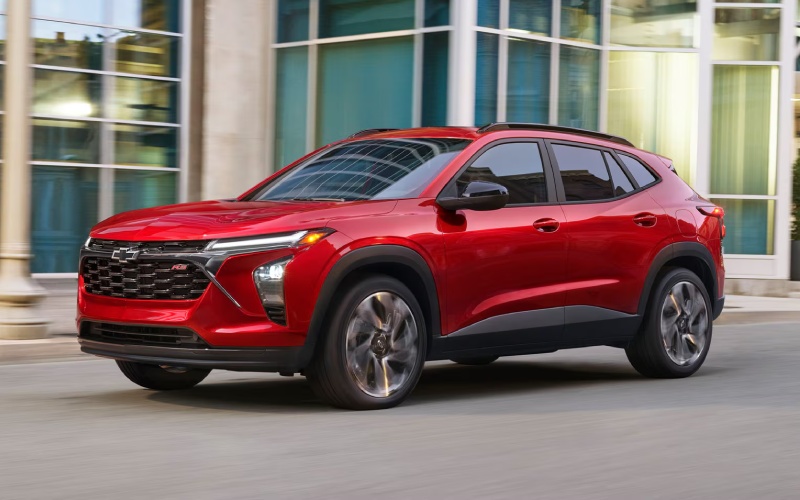
Don Johnson Motors Chevrolet – Does the 2026 Chevrolet Trax need AWD to compete with the 2026 Honda HR-V for Barron, WI drivers?
The short answer
The quick takeaway: the HR-V offers available Real Time AWD™, while the Trax is front-wheel drive. If you’re comparing the two for daily driving around Barron, WI, that single difference raises a fair question. The 2026 HR-V’s AWD system can send torque to the rear wheels when it senses slip, and it includes helpful technology such as Snow mode and Hill Descent Control. The Trax counters with a light, responsive feel, a turbocharged ECOTEC® 1.2L engine that delivers easy low-end torque, and standard Chevy Safety Assist. In real life, that means you have two different paths to everyday confidence: traction by way of extra driven wheels on the Honda, or traction strategies, tire choice, and torque-rich drivability on the Chevy. The best choice depends on your mix of roads and what you value most behind the wheel.
Before you decide, it helps to look beyond the single question of “AWD or not?” Modern stability and traction systems have narrowed the gap on slippery pavement, especially when combined with a good set of all-weather or winter-rated tires. The Trax is a good example: it brings predictable, stable handling, IntelliBeam® High Beam Assist for nighttime visibility, and available features like a built-in Wi-Fi® hotspot and wireless charging that keep your day running without a snag. Meanwhile, the HR-V leans into its AWD credentials with a system designed to respond seamlessly and unobtrusively when roads get messy. In other words, both vehicles work toward the same outcome—driver confidence—using different toolkits.
How drivetrains differ in everyday use
An AWD system like the HR-V’s Real Time AWD™ with Intelligent Control System™ is most noticeable at launch on slick surfaces and when accelerating out of low-speed turns. It’s largely transparent once you’re up to speed, and modern calibrations keep it low-drama. The Trax’s front-wheel-drive layout is tuned for predictable responses, and its turbocharged torque helps you build momentum smoothly without needing to dig deep into the throttle. Around-town, where speeds are moderate and roads are plowed quickly after snow events, many drivers prefer the straightforward, light-feeling nature of FWD paired with the right tires.
On dry roads, both setups deliver dependable traction; the bigger differentiator becomes how each vehicle responds to inputs. The Trax’s engine produces early torque that helps with quick passes and merging. The HR-V’s naturally aspirated 2.0-liter engine and CVT deliver a calm, linear feel at steady speeds. If your routine involves frequent short hops with quick turns onto main roads, the Trax’s more eager low-end response can actually feel more confident.
Traction technologies beyond AWD
It’s easy to overlook how much work electronic systems do during foul weather. Both SUVs employ stability control and traction control to help the driver maintain direction and to minimize wheel slip. The HR-V adds Snow mode to temper throttle inputs and improve takeoff smoothness on slick surfaces. The Trax’s secret weapon is that turbocharged character; working with stability systems, the engine supplies just enough torque to keep the vehicle moving without spinning the tires, especially when paired with season-appropriate rubber. For many Barron-area commutes, that balance proves effective, simple, and reassuring.
Lighting and visibility are also big factors when the weather turns. LED headlights are standard on both, and the Trax includes IntelliBeam® as part of Chevy Safety Assist, automatically managing high beams when you’re driving on darker county stretches. HR-V features automatic high beams as well, and higher trims add a Blind Spot Information System with Cross Traffic Monitor. Functionally, both SUVs work to maximize what you can see—and who can see you—which often matters as much as simply sending torque to more wheels.
What about tires, ground clearance, and clearance angles?
If you anticipate regular unplowed drives or gravel-road use, tire selection may deliver the biggest real-world upgrade, regardless of drivetrain. A dedicated winter-rated tire transforms cold-weather performance on either SUV. Ground clearance and approach/departure angles are comparable for everyday use; neither is intended as an off-roader, but each handles typical snow ruts and driveway transitions capably. In short, AWD is a helpful tool, but traction is a system—tires, electronics, driver inputs, and power delivery all play a role.
Technology and comfort still matter
Confidence isn’t just about traction; it’s also about staying alert and comfortable. The Trax’s available 11-inch center HD touch-screen, standard wireless Apple CarPlay® and Android Auto™, and available wireless charging keep your focus on the road by removing cord clutter and needless taps. The HR-V counters with a standard 9-inch touch-screen, wireless phone charging, and an available 8-speaker audio system on EX-L. Both put safety first: the Trax with Chevy Safety Assist, and the HR-V with Honda Sensing®. If you commute early or late, hands-on tech that works seamlessly—like the Trax’s connectivity or the HR-V’s walk-away auto lock—becomes a meaningful quality-of-life upgrade.
So, which is the better fit around Barron?
If you frequently drive unplowed side roads or want the added assurance of torque sent to all four corners automatically, the HR-V’s available Real Time AWD™ is a solid choice. If your routes are mostly paved and maintained and you value a more responsive feel at lower speeds, the Trax’s front-wheel-drive setup and turbocharged torque strike an appealing balance. Many shoppers also prioritize an intuitive cockpit; the Trax’s larger available screen and standard wireless smartphone integration make it feel exceptionally modern and easygoing day in and out.
- AWD vs FWD priorities: Choose the HR-V if you want AWD intervention on slick starts; choose the Trax if you want light, predictable manners with strong low-end torque.
- Tech that reduces friction: Trax offers an available 11-inch screen and built-in Wi-Fi® hotspot; HR-V brings standard wireless charging and a high-quality 9-inch display.
- Daily comfort & visibility: Both feature LED headlights and driver-assistance suites, with the Trax adding IntelliBeam® and HR-V offering Snow mode and Hill Descent Control.
Frequently Asked Questions:
Does the Trax offer all-wheel drive?
No, the Trax is front-wheel drive. Its stability and traction systems, combined with turbocharged torque and appropriate tires, deliver confident control for most daily driving needs.
Is the HR-V’s AWD always on?
Honda’s Real Time AWD™ with Intelligent Control System™ engages the rear wheels as needed, based on sensor inputs. It’s designed to operate seamlessly and efficiently in the background.
Which SUV has more driver-assistance features standard?
Both are strong: the Trax features Chevy Safety Assist and the HR-V includes Honda Sensing®. Each suite covers critical functions like forward-collision alerts and lane support.
Which one has the bigger touch-screen?
The Trax offers an available 11-inch center HD touch-screen, while the HR-V uses a standard 9-inch color touch-screen across trims.
Still have questions or want to compare how each SUV feels on your actual route? Don Johnson Motors Chevrolet is here to help, serving Cameron, Barron, and Chetek with guidance tailored to your roads and routine. Schedule a drive that mirrors your daily loop and bring your questions—we’ll walk you through the details so you can choose with confidence.
Request more 2026 Chevrolet Trax information
Connect with us


Archives
- 2023 chevy
- 2023 GMC
- Chevrolet Colorado
- Chevrolet Dealer
- Chevrolet Equinox
- Chevrolet Silverado 1500
- Chevrolet Silverado 2500 HD
- Chevrolet Tahoe
- Chevrolet Trailblazer
- Chevrolet Traverse
- Chevrolet Trax
- Chevy GMC Service Center in Rice Lake
- GMC Dealer in Rice Lake, WI
- Rice Lake Chevrolet Dealer
- Rice Lake Chevrolet Service