





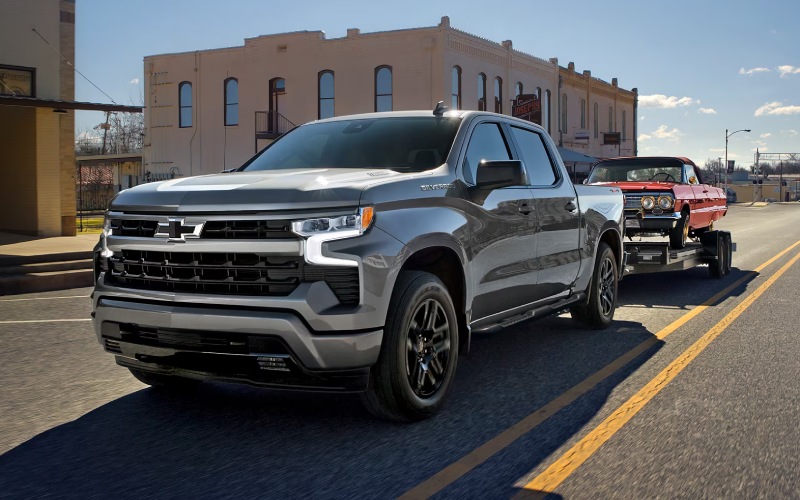
Don Johnson Motors Chevrolet – Which truck tows with more confidence around Barron, WI — the 2026 Chevrolet Silverado 1500 or the 2026 Toyota Tundra?
If you’re narrowing your next half-ton to two heavy hitters, a common question pops up quickly: which truck tows with more confidence? For shoppers around Barron, WI, the answer isn’t just a number on a spec sheet. It’s how the truck feels merging onto US 53 with a loaded trailer, how steady it stays over patched pavement, how easily you can see around the rig when backing into a tricky driveway, and how relaxed you feel after hours on the road. That’s where the Silverado’s unique set of tools—an available Duramax 3.0L Turbo-Diesel, up to 14 available camera views, and available Super Cruise® hands-free driver assistance that works while towing—converge in ways the Tundra can’t match. Toyota counters with strong twin-turbo V6 powertrains, including an i-FORCE MAX hybrid that posts big torque, but its max tow rating lands lower and it skips diesel altogether.
The foundational question: how much can you pull—calmly?
Tow ratings are a starting point, but the bigger story is composure. Silverado checks the big box with a max available 13,300-lb trailering capacity when properly equipped. More important for many owners is how the truck manages that load: the 10-speed automatic helps keep the engine in its sweet spot, and the chassis tuning gives you progressive, reassuring control during lane changes and on long descents. Tundra’s maximum of 12,000 lbs is stout for most toys and trailers, and its multi-link rear suspension does a good job of absorbing impacts. Still, when you’re cresting a hill with a heavy trailer and looking ahead to a crosswind, the Silverado’s broader trailering toolkit—especially the available diesel’s torque delivery—helps you stay composed.
Diesel is a differentiator. Silverado’s available Duramax 3.0L Turbo-Diesel (305 hp/495 lb-ft) brings a relaxed, long-legged feel to the highway. That broad torque plateau keeps shifts smooth and decisive under load, making it easier to maintain speed without hunting gears. Tundra’s i-FORCE MAX hybrid (437 hp/583 lb-ft) is undeniably strong off the line and when passing, but for steady-state towing across rolling terrain, the diesel’s character is uniquely calm and confident. If your weekends involve towing side-by-sides to the Blue Hills or a fishing boat to Red Cedar Lake, that consistent, low-rpm pull goes a long way toward less fatigue and fewer surprises.
Trailering visibility and control: what can you see and anticipate?
Seeing around your trailer—especially at tight launches or when threading a narrow driveway—matters as much as torque. Silverado offers up to 14 available camera views, including hitch, bed, and surround perspectives that make hookups and low-speed maneuvers dramatically easier. Trailer Side Blind Zone Alert adds a layer of awareness at highway speeds, lighting your mirror when a passing vehicle sneaks into the trailer’s blind zone. Tundra provides an available Panoramic View Monitor for 360-degree visibility and trailer backup guidance that helps keep a straight path, which are both helpful. But the sheer breadth of Silverado’s camera coverage means you can choose the view that best fits the moment—backing toward a curb cut, checking bed cargo during a fuel stop, or aligning hitch and coupler perfectly on the first try.
Silverado’s integrated Trailering App is another small-but-mighty win. You can build a trailer profile, run through pre-departure checklists, and monitor key connections from the cab. That extra bit of organization helps, especially if you swap between a camper and a utility trailer during the season. Tundra’s systems are cleanly presented and intuitive, but Chevy’s trailering ecosystem feels a touch more comprehensive in day-to-day use.
Confidence enhancers you didn’t know you needed
The Silverado High Country’s available Super Cruise® stands apart as the only hands-free driver assistance tech in the class that works while towing on compatible roads. Think of it as a co-driver that handles steering and speed on mapped highways, leaving you to focus on the bigger picture. It’s not for every mile or every driver, but on long trips to see family near Cameron or a string of job sites toward Chetek, it’s a meaningful stress reducer that the Tundra doesn’t offer today. When conditions tighten—rain squalls, construction zones, or city traffic—you simply take over as usual, with the system ready to re-engage when the road opens up again.
Underneath, Silverado’s Trail Boss trims add a factory 2-inch lift and Z71 Off-Road Package for ground clearance and durability when your tow route includes a rugged approach road. ZR2 goes further with Multimatic DSSV dampers and front/rear e-lockers—hardware that helps keep traction on off-camber or rutted surfaces where a conventional setup might spin. Tundra’s TRD Off-Road and TRD Pro packages are capable and comfortable, but Silverado’s breadth of off-road options gives you more factory-ready ways to match your rig to your routine.
Cabin tech that lightens the towing workload
Inside, Silverado’s available 13.4-inch touch-screen pairs naturally with the 12.3-inch Driver Information Center, so essential towing data sits where you want it. The optional 15-inch Head-Up Display brings speed, nav, and safety prompts into your line of sight, reducing head-down glances when the trailer needs your attention most. Tundra’s available 14-inch multimedia system is crisp and bright, and its 12.3-inch cluster lays out info cleanly. Both trucks support wireless Apple CarPlay and Android Auto. The difference is how tightly Silverado’s trailering features interlock with camera views, the trailering app, and driver-assistance alerts—an ecosystem effect you feel during the first weekend tow.
Frequently Asked Questions:
Does the Silverado offer a diesel while the Tundra does not?
Yes. Silverado offers an available Duramax 3.0L Turbo-Diesel with 495 lb-ft of torque, giving you calm, steady pull and relaxed cruising. Tundra does not offer a diesel option.
Which truck offers a hands-free system that works while towing?
Only Silverado offers Super Cruise® available on High Country that can operate hands-free while towing on compatible roads. Tundra does not offer a comparable hands-free system for trailering.
How do the max tow ratings compare?
Properly equipped, Silverado maxes out at 13,300 lbs, while Tundra tops out at 12,000 lbs. Always consult each manufacturer’s towing guide, check axle ratios, and factor payload, hitch type, and trailer brakes when configuring your truck.
Which has more camera views for trailering?
Silverado offers up to 14 available camera views, including hitch and bed views. Tundra provides an available 360-degree system and trailer backup guidance but fewer distinct perspectives.
Bottom line: if your most common question is about towing confidence—how composed the truck feels and how easy it is to manage your trailer—Silverado’s combination of diesel availability, comprehensive trailering tech, and unique hands-free capability gives it the edge. That’s why so many shoppers ask for a test drive that includes a trailer hookup, a highway run, and a few tight maneuvers. It’s the clearest way to see how these systems work together in real time.
When you’re ready to step into a tailored configuration and explore the features that fit your trailer and routine, our team is here to help. Don Johnson Motors Chevrolet is proudly serving Cameron, Barron, and Chetek, and we’re happy to walk you through towing setups, trailering apps, and camera views so you roll out confident on day one.
Request more 2026 Chevrolet Silverado 1500 information
Connect with us


Archives
- 2023 chevy
- 2023 GMC
- Chevrolet Colorado
- Chevrolet Dealer
- Chevrolet Equinox
- Chevrolet Silverado 1500
- Chevrolet Silverado 2500 HD
- Chevrolet Tahoe
- Chevrolet Trailblazer
- Chevrolet Traverse
- Chevrolet Trax
- Chevy GMC Service Center in Rice Lake
- GMC Dealer in Rice Lake, WI
- Rice Lake Chevrolet Dealer
- Rice Lake Chevrolet Service